People · Religion
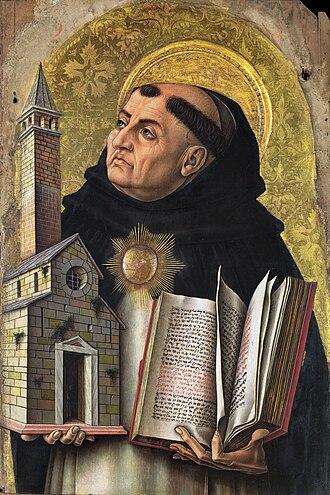
Thomas Aquinas
Middle Ages · 1225–1274
Reason completed by revelation, and a natural law that binds even the sovereign.
Editorial estimate
Take the test to see your compatibility
Take the testProfile on the twelve axes
GovernanceBalanced
DemocracyAutocracy
Governance: BalancedStructure60% Unitary
FederalUnitary
Structure: 60% UnitaryLiberty60% Security
LibertySecurity
Liberty: 60% SecurityImmigration70% Assimilation
MulticulturalAssimilation
Immigration: 70% AssimilationSociety80% Traditional
ProgressiveTraditional
Society: 80% TraditionalReligion100% Religious
SecularReligious
Religion: 100% ReligiousOwnershipBalanced
PublicPrivate
Ownership: BalancedMarketsBalanced
PlannedMarket
Markets: BalancedTrade60% Protectionist
GlobalistProtectionist
Trade: 60% ProtectionistDiplomacy55% Militarist
PacifistMilitarist
Diplomacy: 55% MilitaristSovereignty60% Nationalist
InternationalistNationalist
Sovereignty: 60% NationalistTechnology65% Nature
TechnologyNature
Technology: 65% NatureWorks in the catalog
Summa Theologica
Thomas Aquinas · 1485
Look up the book
Close to this profile
Scripture against institutional authority, and the household as the school of faith.
A universal empire and a vernacular literature, with judgement as the structure of the cosmos.
Two cities, one earthly and one divine, with obedience as the discipline of a fallen world.
A mixed constitution for the many, with virtue and leisure as conditions of citizenship.